Providing the best care to adult and children survivors of human trafficking
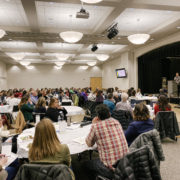
On May 31, 2018, more than 140 service providers, law enforcement officials, church groups, health care providers, volunteers and lay-persons gathered together at the Western Michigan University Cooley Law School in Auburn Hills for a six-hour training discussing the importance of trauma-informed care practices when working with survivors of human trafficking.
Attendees heard from experts in the field, including Dr. Michelle Munro-Kramer from the University of Michigan’s School of Nursing; Maggie Dunn, founder of the House of Providence in Detroit and licensed therapist; Alice Johnson, author, consultant, survivor, and found of Sister Survivors; and Edee Franklin, founder of Sanctum House. Attendees also had the privilege to hear from a brave young man who told his story of being labor trafficked since the age of 7 years old.
Here are some highlights from each speaker!
Trauma-Informed Care by Dr. Michelle Munro-Kramer
SAMHSA (Substance Abuse and Mental Health Services Administration) defines Trauma as “a result from an event, series of events, or set of circumstances that is experienced by an individual as physically or emotionally harmful or threatening and that has lasting adverse effects on the individual’s functioning and physical, social, emotional, or spiritual well-being.”
According to the National Child Traumatic Stress Network, Complex Trauma is defined as “typically involving exposure to sequential or simultaneous occurrences of maltreatment (including psychological maltreatment, neglect, physical and sexual abuse, and domestic violence). Exposure to these initial traumatic experiences – and the resulting emotional dysregulation and the loss of safety, direction, and the ability to detect or respond to danger cues – often sets off a change of events leading to subsequent or repeated trauma exposure in adolescence and adulthood.”
Michelle’s presentation discussed the importance and need for trauma-informed care practices when providing care to survivors of trauma. Below are some highlights from her talk:
Based on SAMHSA’s definition, traumatic exposures involve the 3 E’s:
- Events -> Events and circumstances cause trauma
- Experience of the Event(s) -> An individual’s experience of the event determines whether it is traumatic.
Affected by HOW, WHEN, WHERE, and HOW OFTEN
- Effects -> Effects of trauma include adverse physical, social, emotional, or spiritual consequences.
*Trauma can affect people of every race, ethnicity, age, sexual orientation, gender, psychosocial background and geographic region. Trauma often affects an individual’s resources to cope, and often ignite the “fight, flight, or freeze” reaction at the time of the event(s).
Based on SAMHSA’s definition, a trauma-informed approach includes the 4 R’s:
Trauma-informed practices consider the adverse affects that trauma can have on an individual’s physical and mental health and well-being. In order for events, organizations, and individuals to incorporate trauma-informed practices into their work, they must follow the 4 R’s.
- Realize the widespread impact of trauma and understand the potential paths for recovery.
- Recognize signs and symptoms of trauma in clients, families, staff, and others involved with the system.
- Respond by fully integrating knowledge about trauma into policies, procedures, and practices.
- Seek to actively Resist Re-traumatization.
*It’s important to recognize that re-traumatization is a risk whenever individuals who have experienced trauma are exposed to their trauma histories without sufficient tools, support, and safety to manage emotional behavioral and physical reactions.
SAMHSA’s Six Key Principles of Trauma-Informed Approach:
We encourage you to take a trauma-informed approach in the work you do.
- Safety – Providers must be responsive and adapt the environment to establish and maintain physical and emotional safety.
- Trustworthiness and Transparency – Operations and decisions related to the client will be conducted with transparency with the goal of establishing and maintaining trust.
- Peer Support – Survivors of trauma will be encouraged to practice mutual self-help in order to build a setting of trust and collaboration.
- Collaboration and Mutuality – Ensure the provider-client relationship is collaborative and then build beyond this relationship.
- Power, Voice and Choice – The importance of resilience and the power of individuals’ strengths and experiences will be affirmed and promoted. Likewise, organizations need to reinforce the importance of staff autonomy, choice, and sense of control.
- Cultural, Historical, and Gender Issues – To understand how trauma affects an individual, you must first understand the identities of the individual including racial, ethnic, and sexual identity; the cultural needs of individual; as well as the intersectionality of identities, and historical trauma.
*Text from this portion was provided in a handout that Dr. Munro-Kramer provided, which was put together by the CASCAID collaborative – a group from the University of Michigan School of Nursing.
Trust-Based Relational Intervention (TBRI) by Maggie Dunn
Maggie Dunn, founder of House of Providence in Detroit, is a licensed therapist with a passion for empowering and caring for the orphaned child. Together with her husband Jason, they operate House of Providence – a residential facility that provides a therapeutic and familial environment for minors who are languishing without the prospect of a permanent family of their own.
HOP also provides vital intervention and support services that afford vulnerable foster youth in the State of Michigan with safety emotionally, mentally and physically. Because of the direct care and individual attention given, program residents eventually stabilize and are then able to receive trauma focused therapy where they process their difficult journey and begin to heal.
One evidenced-based practice that HOP employs in their continuum of care is Trust-Based Relational Intervention. During the Empower 2018 Event, Maggie presented on the tenets of how she employs TBRI:
Trust-Based Relational Intervention is:
- Earning trust
- Empowering the survivor
- When you don’t have options, you make bad choices. The HOP team walks through the healing process with each resident, providing hope
- Connecting with the survivor
What is trauma?
- An injury to either psyche, body, or relationship.
- Wounds – makes you more sensitive, and informs all responses to external stimuli
- Neuromuscle memory – brain sensitivity
- Acute versus prolonged – limbic system
Aging out of foster care is the number one precursor for victims of human trafficking. The correlation between foster care and human trafficking is large, and it’s due to no one looking for the youth in foster care.
Restoring resiliency
Neuroplasticity
Trauma cuts the youths chronological age in half, and they operate with a trauma brain. They’re prone to type 2 diabetes, with vitamin deficiency. The youth also come to us in an educational, medical, dental, and mental health crisis. They’re also in a relational crisis as they are alone on the planet. They’re come to us angry, mistrusting, no clothing, and with lice and bedbugs.
When there is a lack of options- poor decisions are made. We operate with a Trust-Based Intervention:
- Empowering by meeting physical and immediate needs.
- Connecting by meeting attachment needs
- Correcting principles, by disarming fear based behaviors.
- Felt safety – the child determines this
- Calming limbic system
- Meet needs and offer external regulation
Our program: How do we do this, practically?
- Red level: stabilization (bonding with staff, assessment period, coping skill identification, full observation, etc.)
- Yellow: trauma processing/deinstitutionalization, mentor matching, learning their value, a timeline of life, etc.
- Green: community reintegration, RAD training, integration into a family, always pushing toward caregivers.
It only takes one adult to change the trajectory of an entire life!
For more information about the House of Providence visit http://thehofp.org. For information on foster care in Michigan and the state of the orphaned child, click HERE. And for more information on Trust-Based Relational Intervention and how to best employ these practices, click HERE.
5 Things Survivors Wish Service Providers Knew about their Trauma by Alice Johnson
Providing Survivor Care by Edee Franklin
Edee Franklin, the founder of Sanctum House, earned her Master’s Degree in Education from Wayne State University and was a special education teacher for several years.
At the Empower 2018 event, Edee spoke about her passion for empowering survivors of human trafficking, which ultimately fueled her dream of opening Santum House.
Sanctum House is a 2-year residential safe home for trafficked survivors. The program focuses on physical, psychological, emotional, education, and spiritual healing for adult women survivors. Staff at Sanctum House pride themselves on providing holistic services, anchored in trauma-informed care best practices. The program provides the life skills needed for program residents to achieve success and independent living.
For more information on Sanctum House, visit https://www.sanctumhouse.org.
About MAP’s Annual Empower Event:
The Empower conference is an annual MAP event that addresses high-level challenges and opportunities pertaining to human trafficking in Michigan. Empower is designed to equip experts and experienced community advocates who are working towards collaborative solutions.
To get involved with MAP and/or the Empower event, email info@map-mi.org.

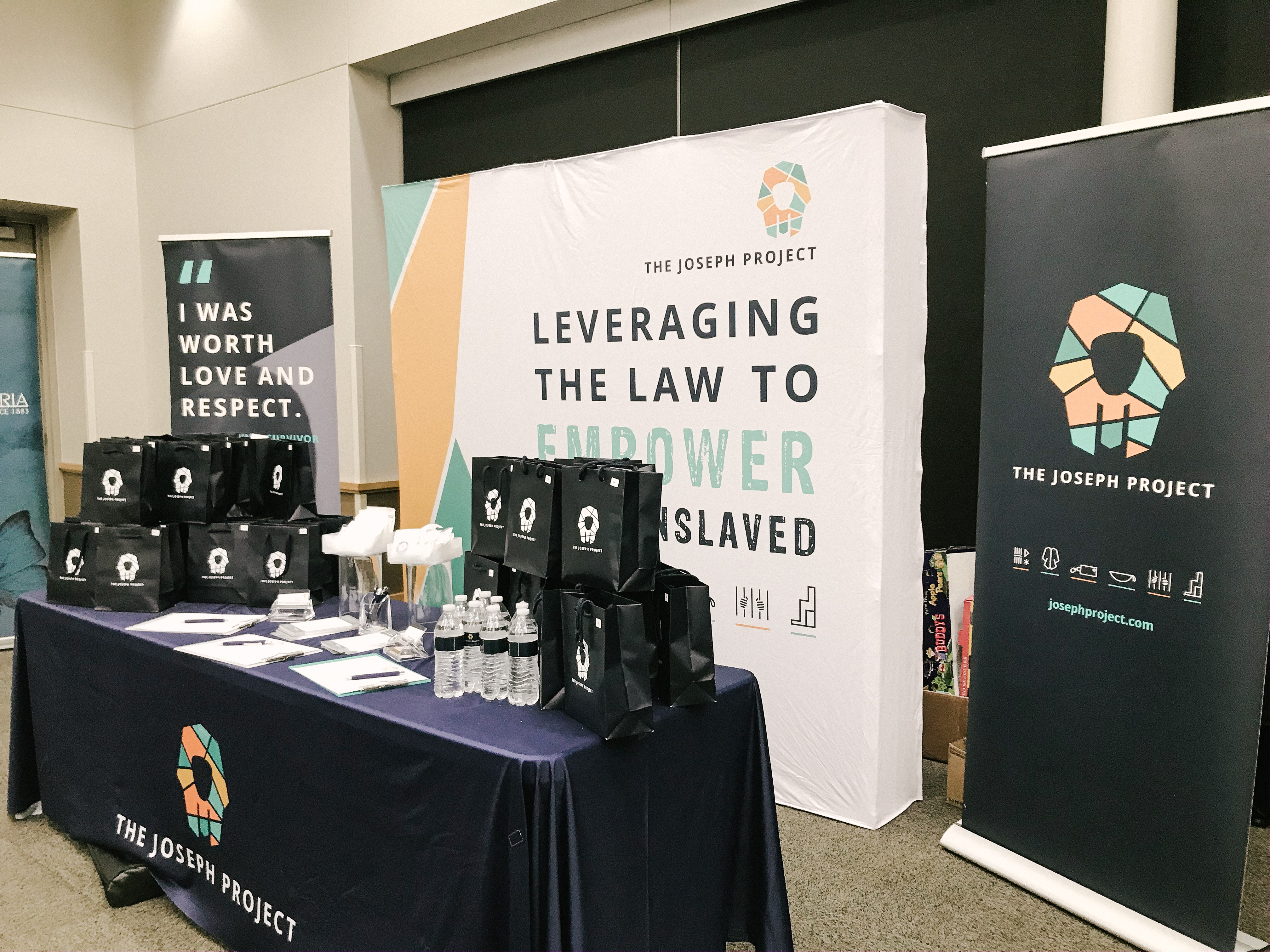 This year our co-sponsor and Key Note presenter was The Joseph Project. Jennifer Grieco (immediate past President of the State Bar of Michigan) and Nate Knapper (Founder and CEO, The Joseph Project) provided a great overview of this new organization and their services. Trafficking survivors often face legal obstacles that arise from the circumstances of their exploitation. Yet, they often do not have the knowledge or the financial means to secure skilled legal representation. Known as the “justice gap,” this inability to secure legal assistance often impedes survivors from moving toward a brighter future. The Joseph Project provides survivors of trafficking access to a group of legal “first responders” who offer legal assistance and a commitment to service survivors’ legal needs on a pro bono basis.
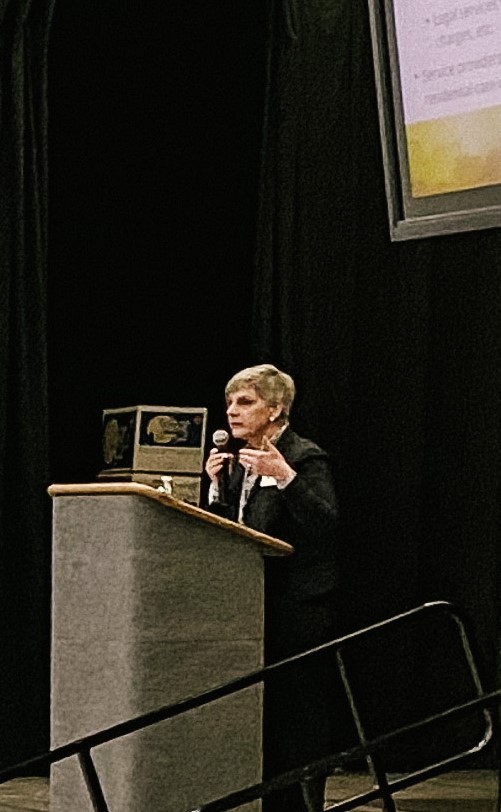 Angela Aufdemberge (President and CEO of Vista Maria) presented a summary of her 2019 Eugene Miller Fellowship project in which she interviewed experts and stakeholders in our state and around the country. Some of her suggestions for Michigan’s way forward are: